



Renaissance and Baroque musical instruments
News
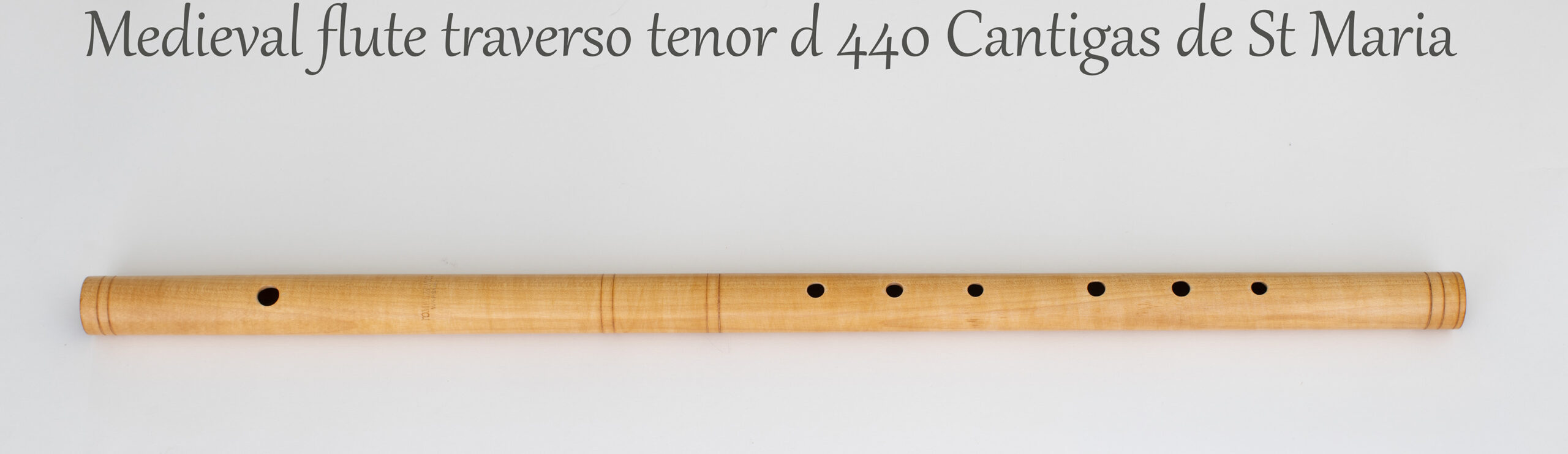
Medieval Flute Traverso tenor in d Cantigas de St Maria
No medieval transverse flutes have survived. Probably the only such flute is the 2662 in the collection of the Berlin Instrument Museum, but this is still a matter of debate. I have been making this Berlin flute in my studio for many years; you can hear it on my website in several recordings. It is a flute with very thick walls, a bore of approximately 18 mm and a mouthpiece of approximately 8 mm. This flute plays in comparison to Renaissance flutes, with a significantly larger sound, rich timbre, and good resonance. The only Renaissance flute with parameters similar to this one is the two-piece flute at 408 Hz – C. Rafi from the Instrument Museum in Bologna. I would like to present to you a new "medieval" flute from my studio, completed tonight, whose external form is identical to the iconography from the Cantigas de St. Maria. I wanted this flute to be similar in design to the Berlin flute, but lighter, louder, and with quick articulation. This flute has a larger bore than the Berlin flute, very thin walls, and a larger, more comfortable mouthpiece. Its delicacy is comparable to reed flutes, bansurii, etc., despite being made of European mountain maple. I consider this project a great success. This flute meets all my expectations.
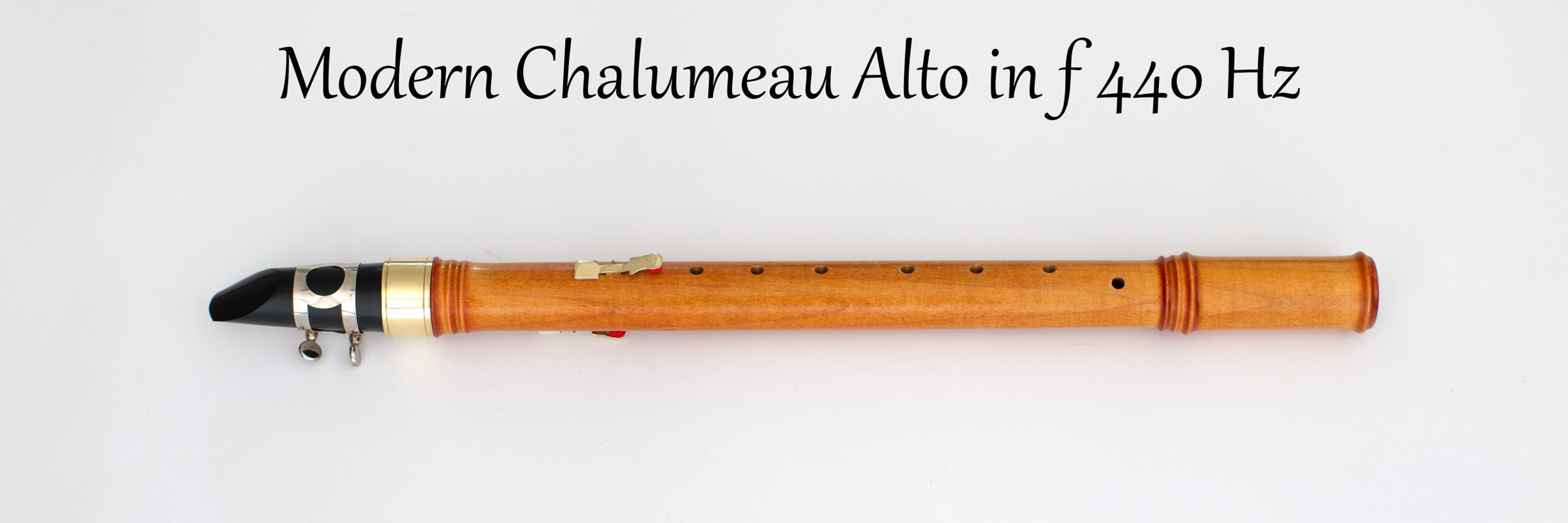
Moder Chalumeau Alto in f 440 Hz
A modern Chalumeau Alto with a frequency of 440 Hz, made of mountain maple, with a range of over 2.5 octaves. Excellent intonation, powerful sound, and great dynamics.

New Model – Cornetto Muto in F
This replica from a museum in Vienna features minor modifications, such as a change in pitch to 440 Hz. The instrument is a two-piece instrument, making it much easier to transport. Its two-piece construction does not compromise sound or intonation. The mouthpiece can be made of wood, like the original, or of black horn, which provides a louder, more stable, and brighter sound. This cornetto is characterized by a noble sound that harmonizes perfectly with singers' voices and is also a solo instrument, perfect intonation throughout the entire scale, and ease of play.
Because the cornetto is over 70 cm long, holes 3 and 6 can be repositioned upon request for greater playing comfort.

Kohler Flute
This flute comes from the English branch of the Kohler family, likely dating from 1820-1840. The original flute is made of boxwood with 8 keys on blocks (the current version with 6 keys is pictured) and operates at 440 Hz. The headjoint is connected to the barrel by a brass tube, which allows for intonation correction. The keys are reminiscent of classical flutes such as the Grenser, and the flute ends were created on the original flute with white ivory rings. The original Kohler flute is characterized by excellent intonation and a beautiful classical sound. In its classic form, it can be used for early 19th-century flute playing (Beethoven, Schubert, Weber, etc.). This flute was built in my workshop with additional sound variations. For classical musicians, where all the parameters of the originals are retained, as well as for contemporary folk musicians. The sound of this "folk" flute has been crafted to achieve a very large volume without much effort and with excellent intonation.
This flute is available in original 440, 430, and 435 Hz in boxwood, satinwood, and Brazilian cherry.

Rauch von Schrattenbach
A Renaissance tenor traverso flute in the key of D, a copy from Rauch von Schrattenbach.
This family of Bavarian flute and recorder makers was active in the 15th and 16th centuries. Preserved instruments from their workshop can be seen in several museums: in Verona, Rome, Salzburg, Antwerp, and elsewhere.
The characteristic symbol/logo of their instruments is a trefoil. The flute I reconstructed comes from Verona. Compared to other Renaissance flutes, such as the Schnizter, Rafi, or Bassano, it is much more delicate and has thinner walls. Its sound is sweet and very well-balanced throughout the entire scale. It can be made at frequencies of 440, 415, 400, and 465 Hz.